Preparing Your Child for the Transition to High School
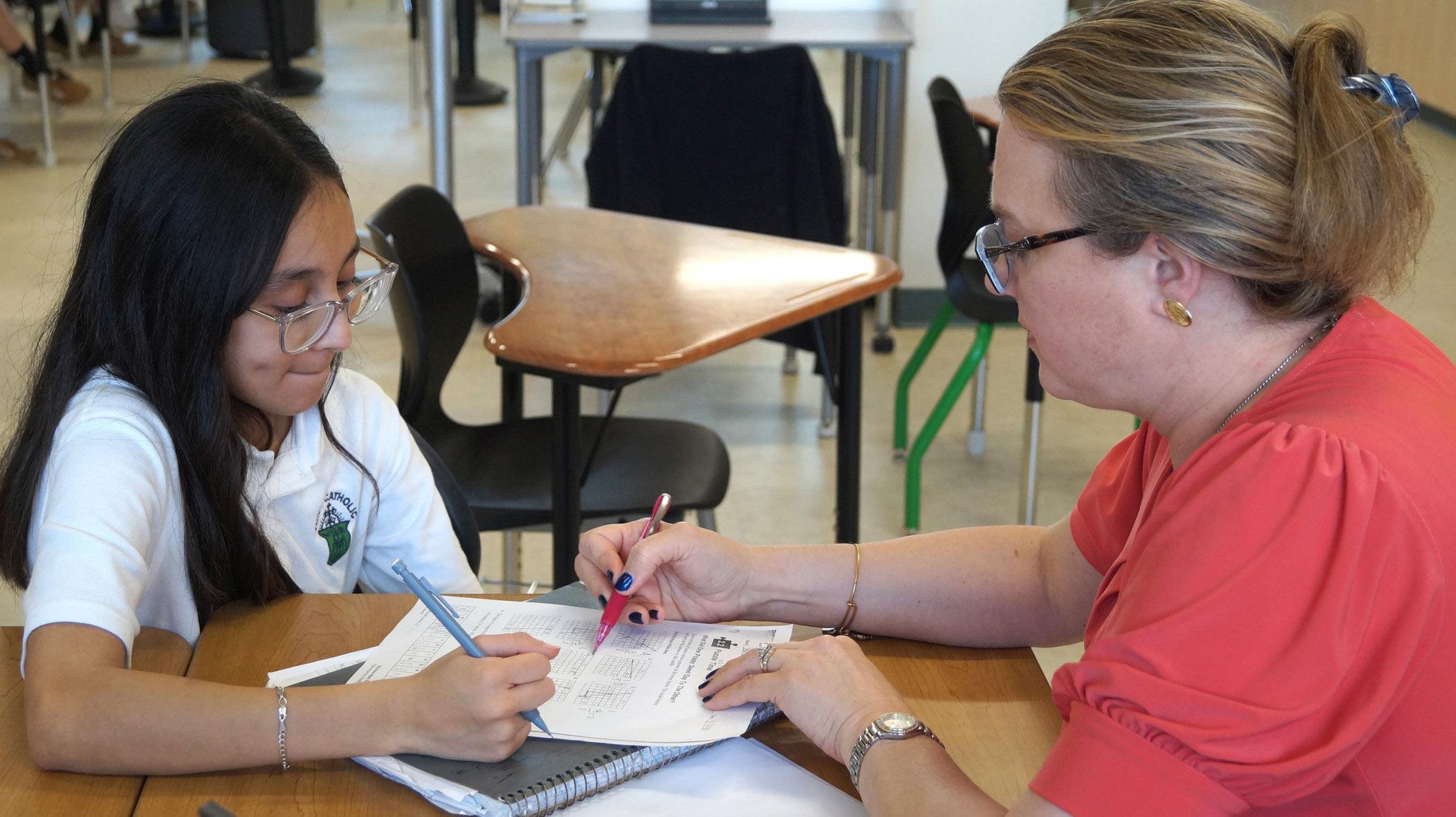
Six Practical Tips to Help Your Student Feel More Confident About the Next Chapter
Starting high school is an exciting milestone, but like any significant change, it can bring uncertainty and some butterflies in the stomach for students and parents alike. More challenging classes, new friendships, and greater independence are all part of the experience and may require some adjustment. If you’re wondering how to help your child feel ready, you can take small steps together to help ease the transition.
The guidance team at York Catholic recommends beginning during the middle school years, giving students time to practice new habits and discover what works for them. Whether your child is continuing at a familiar school or joining a new educational community for their high school years, your encouragement can help them approach this next chapter with confidence. Explore a few of our tips to make the transition as seamless as possible.
1. Build Good Organization and Time Management Habits
Keeping track of assignments and activities gets more important as schoolwork becomes more demanding. A planner or calendar gives your child one place to record homework deadlines, tests, and extracurricular commitments. Encourage them to find a system they’ll actually use, including a way to organize digital assignments and materials.
Big projects can feel a little less intimidating when students tackle them one step at a time. Help your child break an assignment into smaller tasks, decide when to complete each one, and track their progress. A simple checklist or visual progress chart can help them see how far they’ve come.
A consistent evening routine also makes it easier to find time for schoolwork and prepare for the next day. These habits take practice, so leave room to try things out and make adjustments together.
2. Offer Support While Making Room for Independence
Knowing when to step in and when to step back can be one of the trickier parts of parenting a growing student. The right balance will depend on your child’s maturity and needs. They may need more support at first while they find a routine that works.
Ask your child to show you their planner and talk through their plan. Questions such as “What needs to get done first?” or “What’s your next step?” can help them think through their responsibilities while keeping you involved.
There will undoubtedly be mistakes along the way, and that’s part of learning. When something doesn’t go as planned, help your child consider what happened and what they could do differently next time. Giving them space to solve problems now helps build skills they’ll use throughout high school and beyond.

3. Make Asking for Help Feel More Comfortable
Speaking up can take courage, especially when students are getting to know new teachers. Your child may need a reminder that asking a question is welcome and that teachers and counselors want to help.
Self-advocacy begins with recognizing a need and finding a way to express it. If an in-person conversation feels intimidating, a short email can be a good first step. Staying after class to ask for clarification, perhaps with a friend alongside them, can also make the conversation feel more approachable.
School counselors offer another place to practice these skills. With encouragement and experience, students can become more comfortable explaining what they need and taking an active role in their learning.
4. Encourage Involvement and Give Friendships Time
“Will I find my people?” can be a big question for students entering high school. Let your child know it’s okay to feel nervous and that friendships don’t have to happen overnight. Ask about something positive in their day without putting pressure on them to make friends on a particular timeline.
Shared interests are a natural place to start. Encourage your child to try a club, sport, or other activity they enjoy, even if their friends choose something different. If they’re interested in both athletics and the musical, for example, they can explore both. There’s room to discover more than one side of themselves, and starting with one manageable commitment can help your child get involved while leaving time to adjust to classes and new routines. As they settle in, you can revisit that balance together.
For a little extra encouragement to share with your student, explore YC’s tips from students who have transitioned schools. As a private school serving students in grades 7 through 12, York Catholic is regularly someone’s new school, and nearly everyone in our community can recall what it was like to be “the new kid.”
5. Explore The Future with an Open Mind
Though thinking about and planning for the future in earlier years is a good thing, your child doesn’t need to have everything figured out before ninth grade. This is a good time to get curious about what they enjoy, what they do well, and what matters to them.
Making separate lists of interests and strengths can open conversations about possibilities. Keep an open mind as those interests develop; discovering something new is part of the high school experience.
At York Catholic, students meet with their school counselor each year to discuss future goals based on their skills and interests. The SOAR class in tenth grade also helps students connect their interests with plans after high school, and our guide to exploring future career paths during high school offers more ideas for continuing that conversation.
6. Remember That Settling in Takes Time
The transition to high school unfolds over time, with positive moments and a few bumps along the way. Your child’s experience will have its own pace, and the key is to understand and support the process. At YC, counselors visit ninth-grade classrooms within the first few weeks of school to introduce themselves and share ways to get involved. They also meet individually with students to check on their adjustment and answer questions. Students can reach out to their counselor whenever they need support.
One counselor recalled a new student who arrived nervous after a difficult experience at a previous school. Connecting with classmates took time. By the time a spring check-in rolled around, the student was thriving, involved, and happy to be part of the community. This reminds us that those uncertain first days don’t tell the whole story. Keep listening, stay encouraging, and give your child space to find their footing.
Take the Next Step with York Catholic
As your child prepares for high school, having people to turn to can make the next chapter feel more welcoming. At York Catholic, students are encouraged to explore their interests, ask for support, and find their place in our community. Schedule a visit to meet the people who will support your student along the way. We’d love to help your family get to know YC.